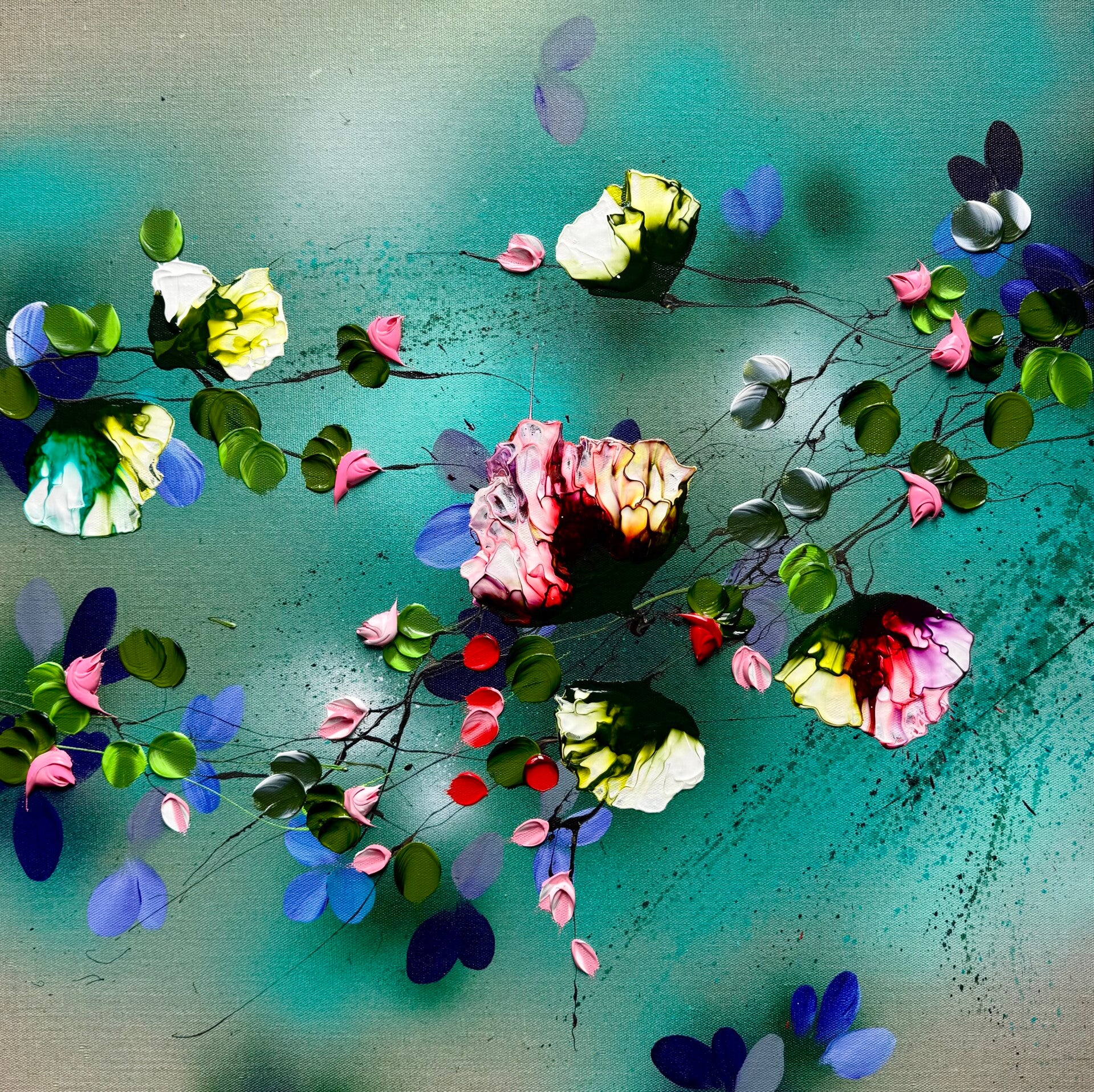
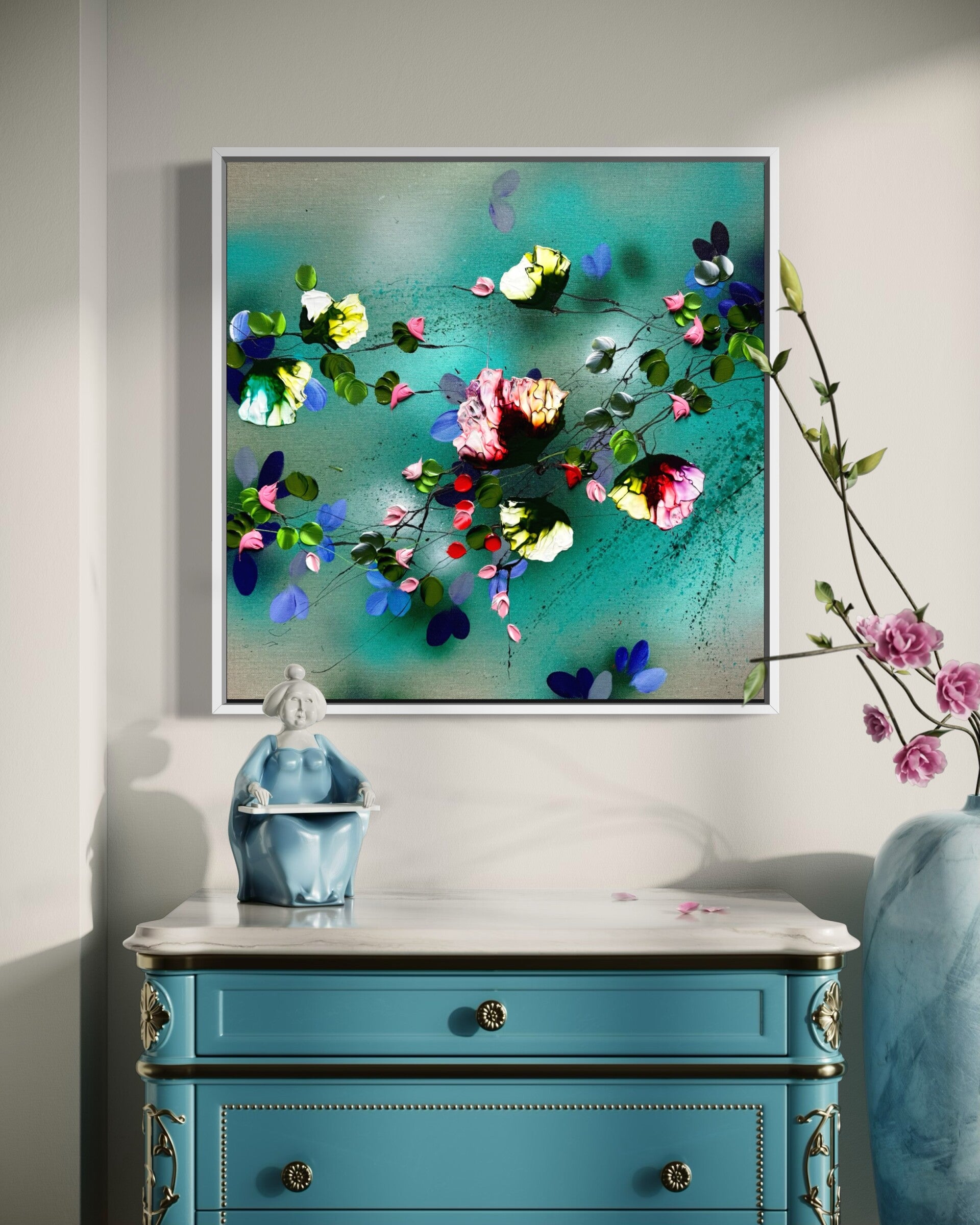
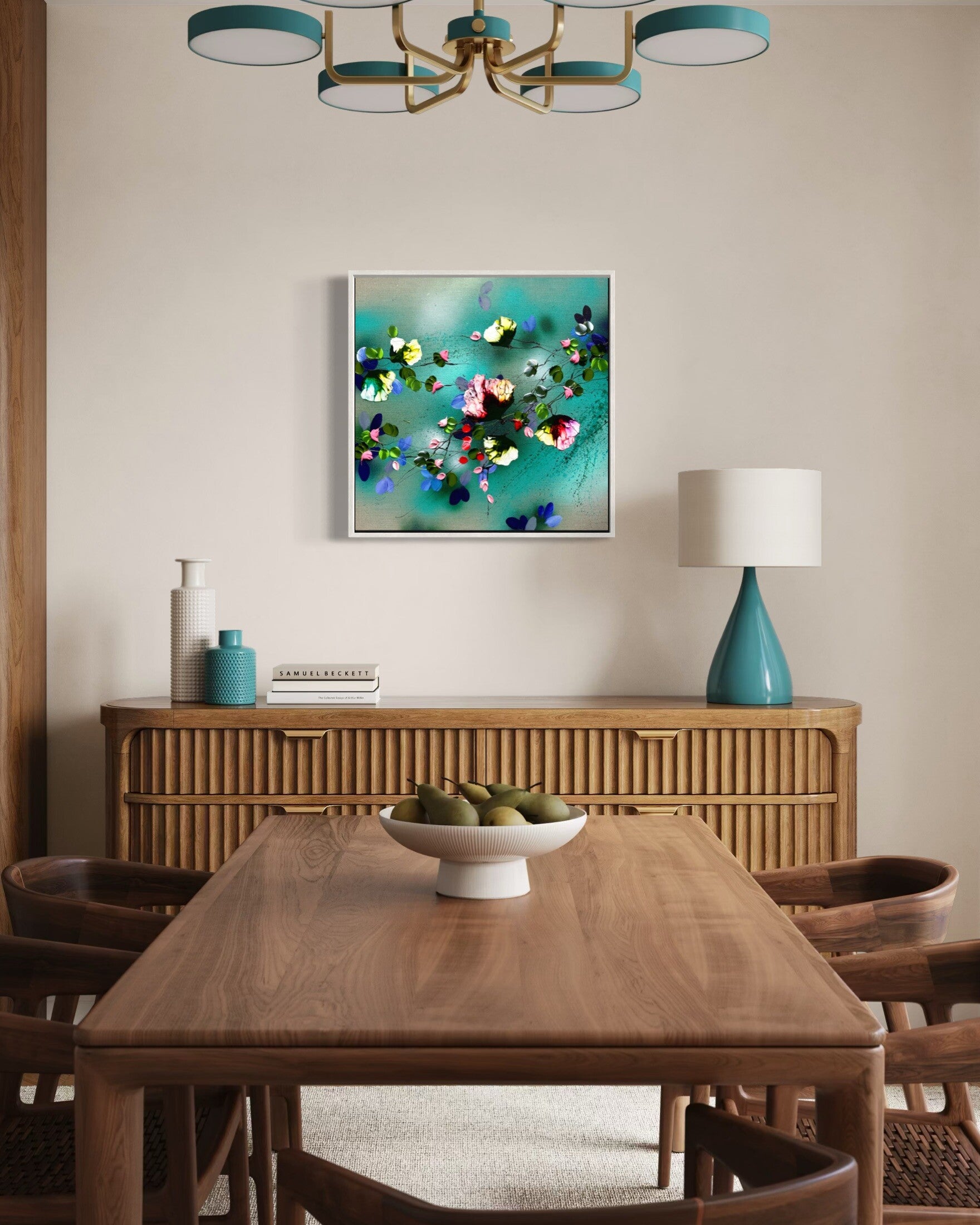
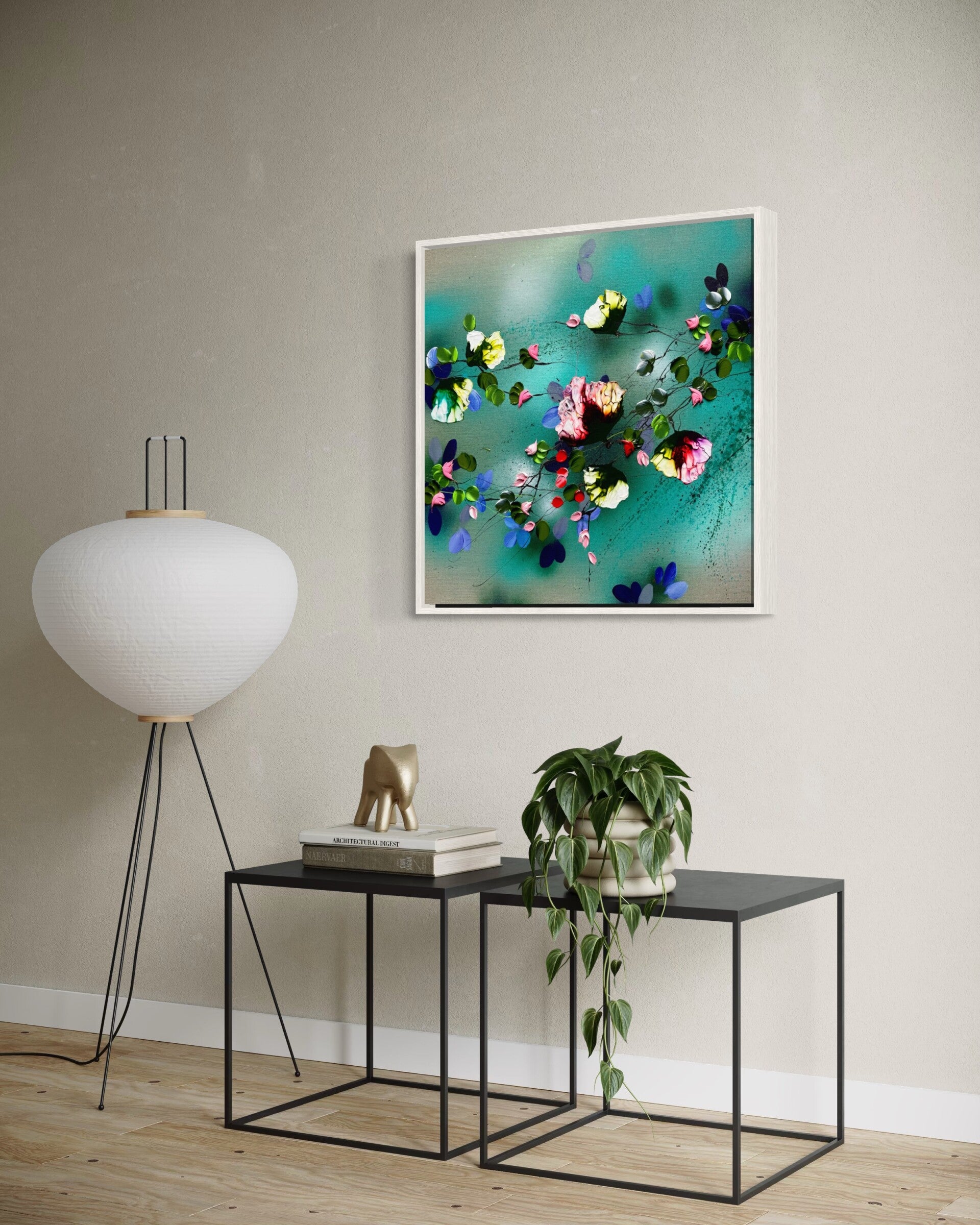
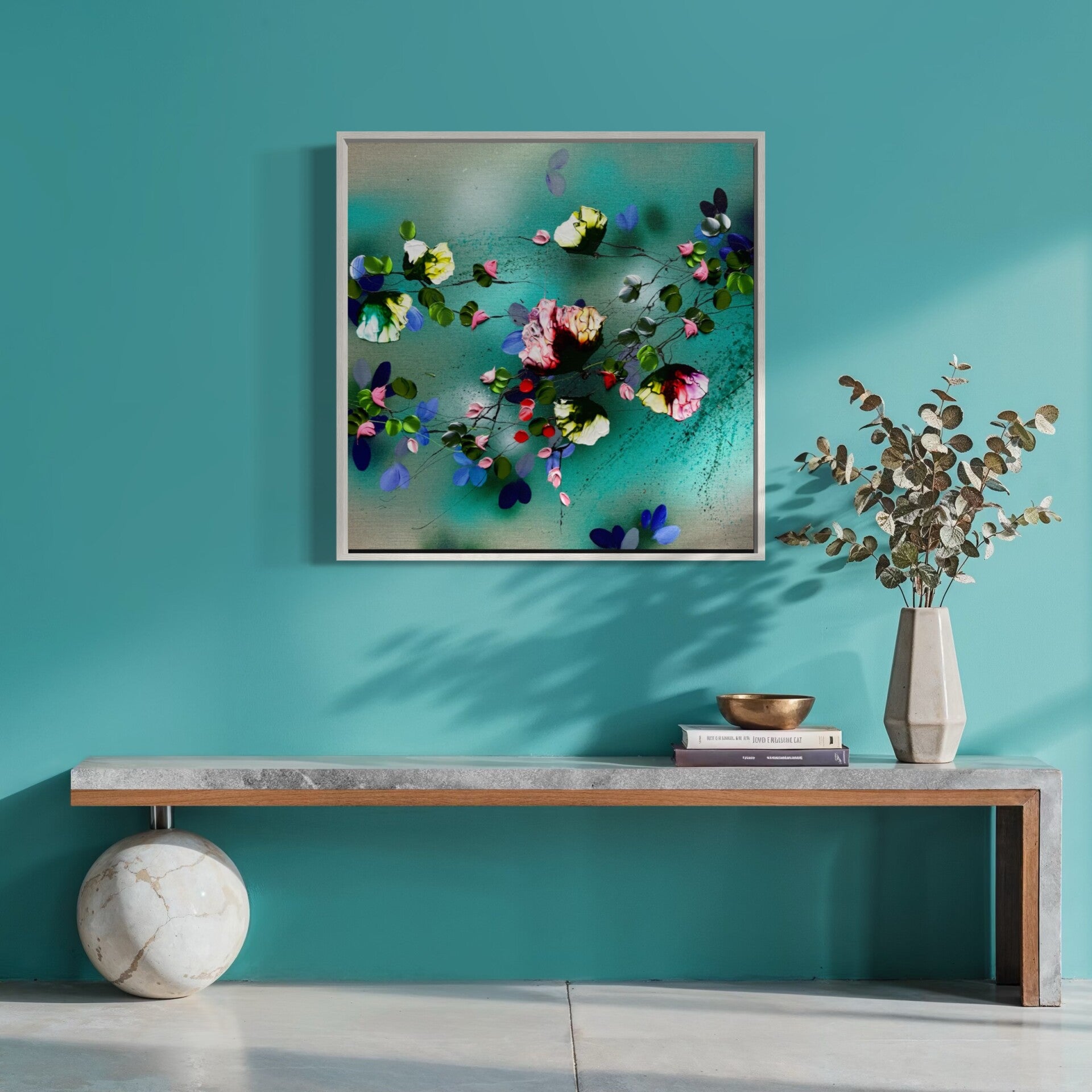
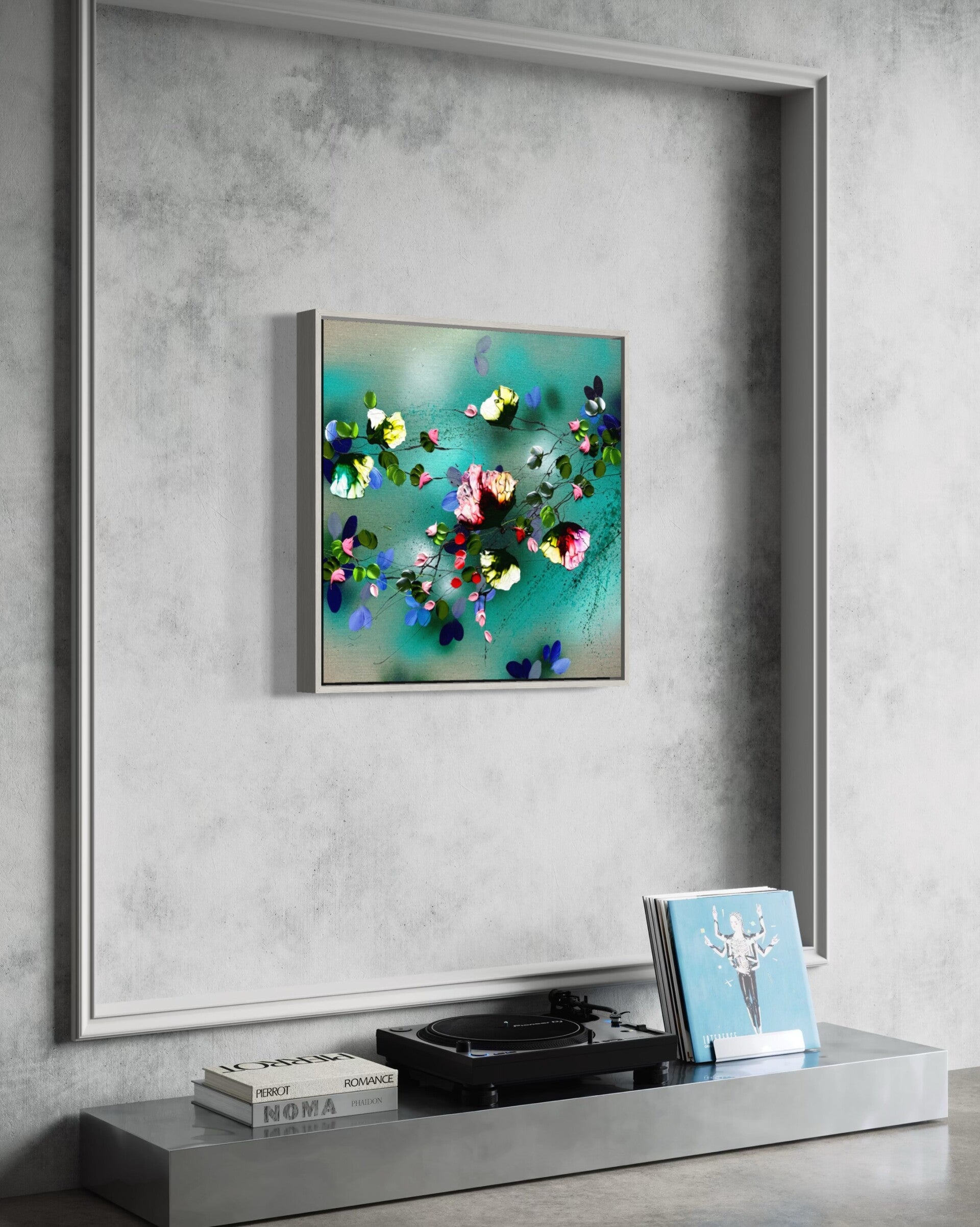
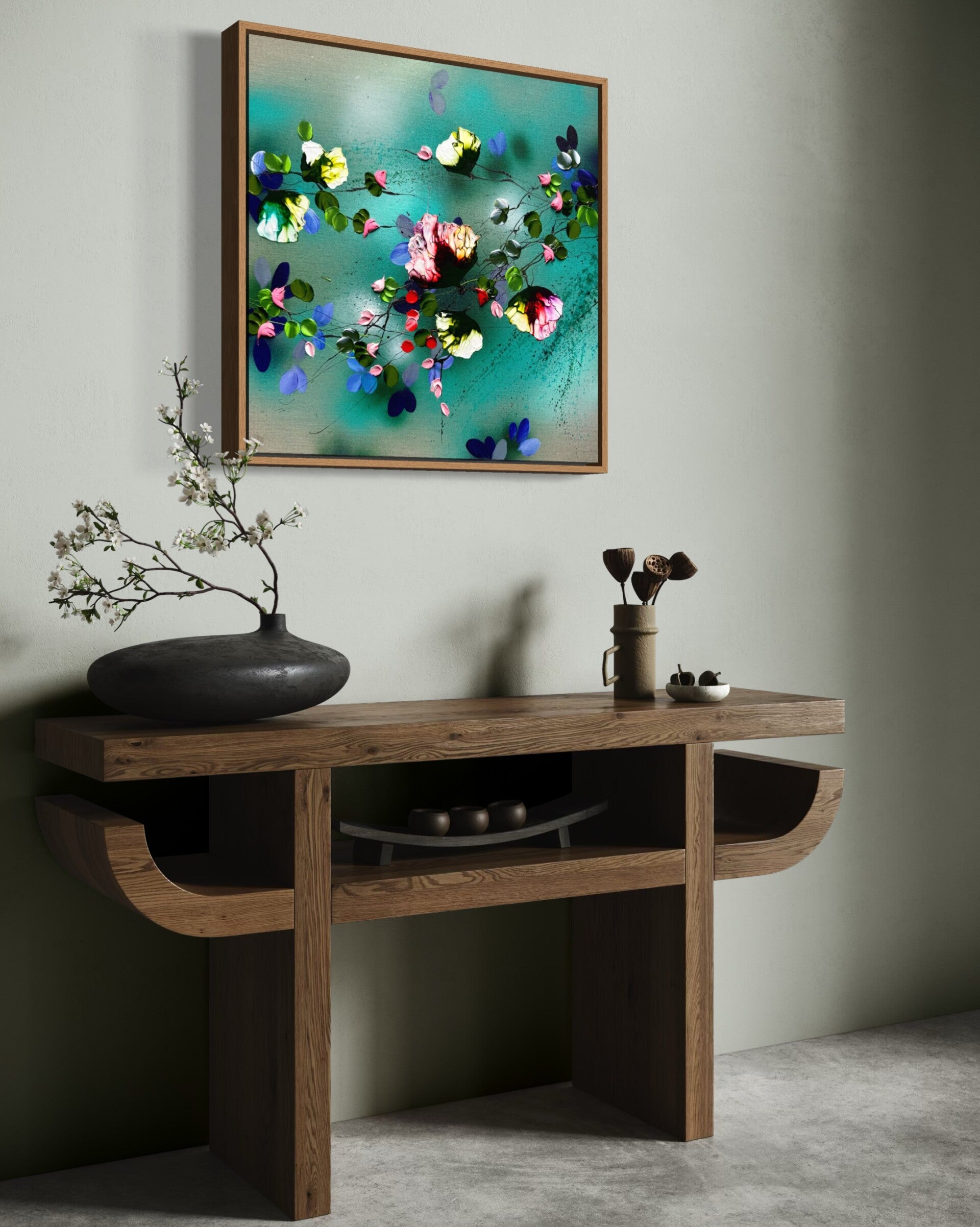
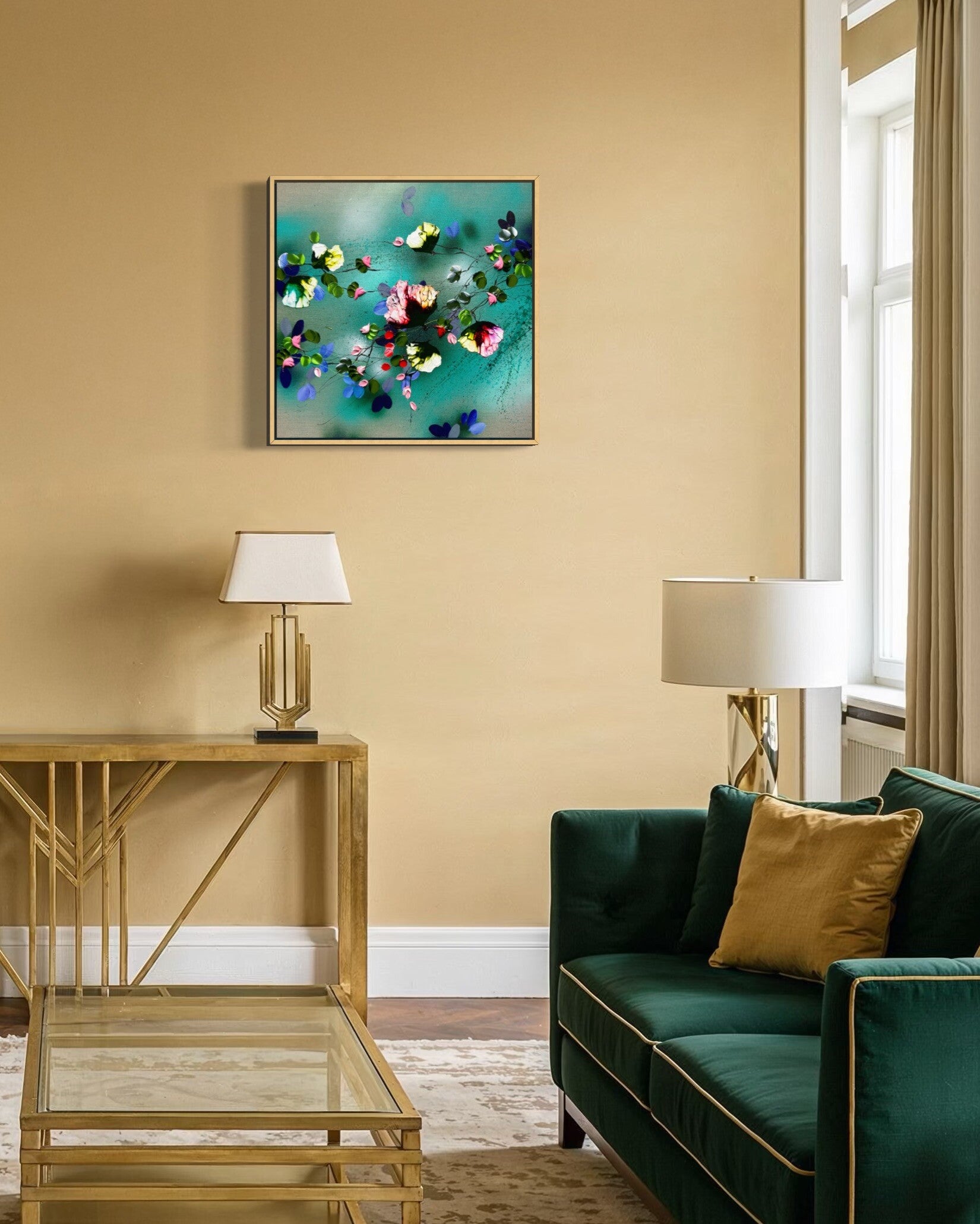
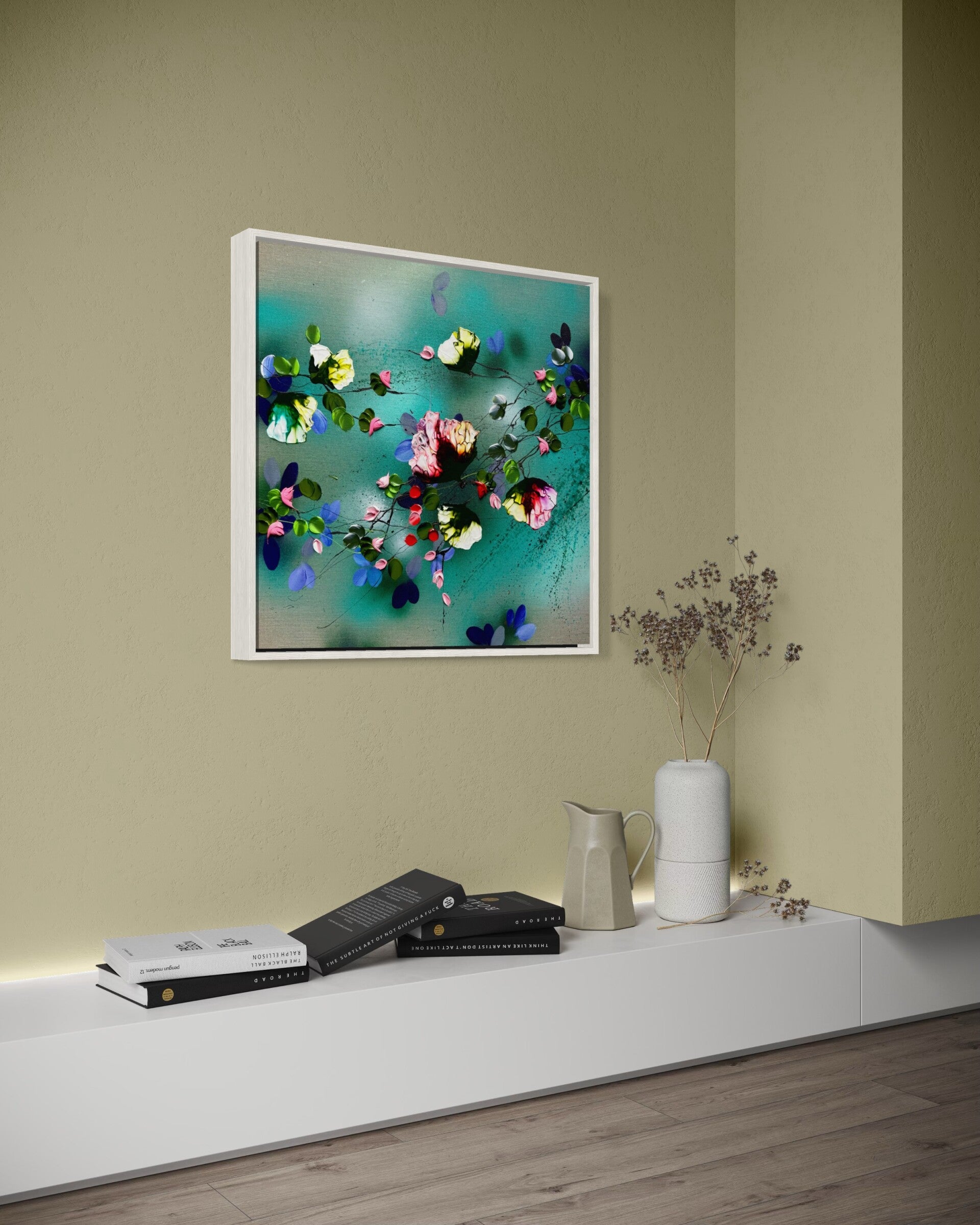
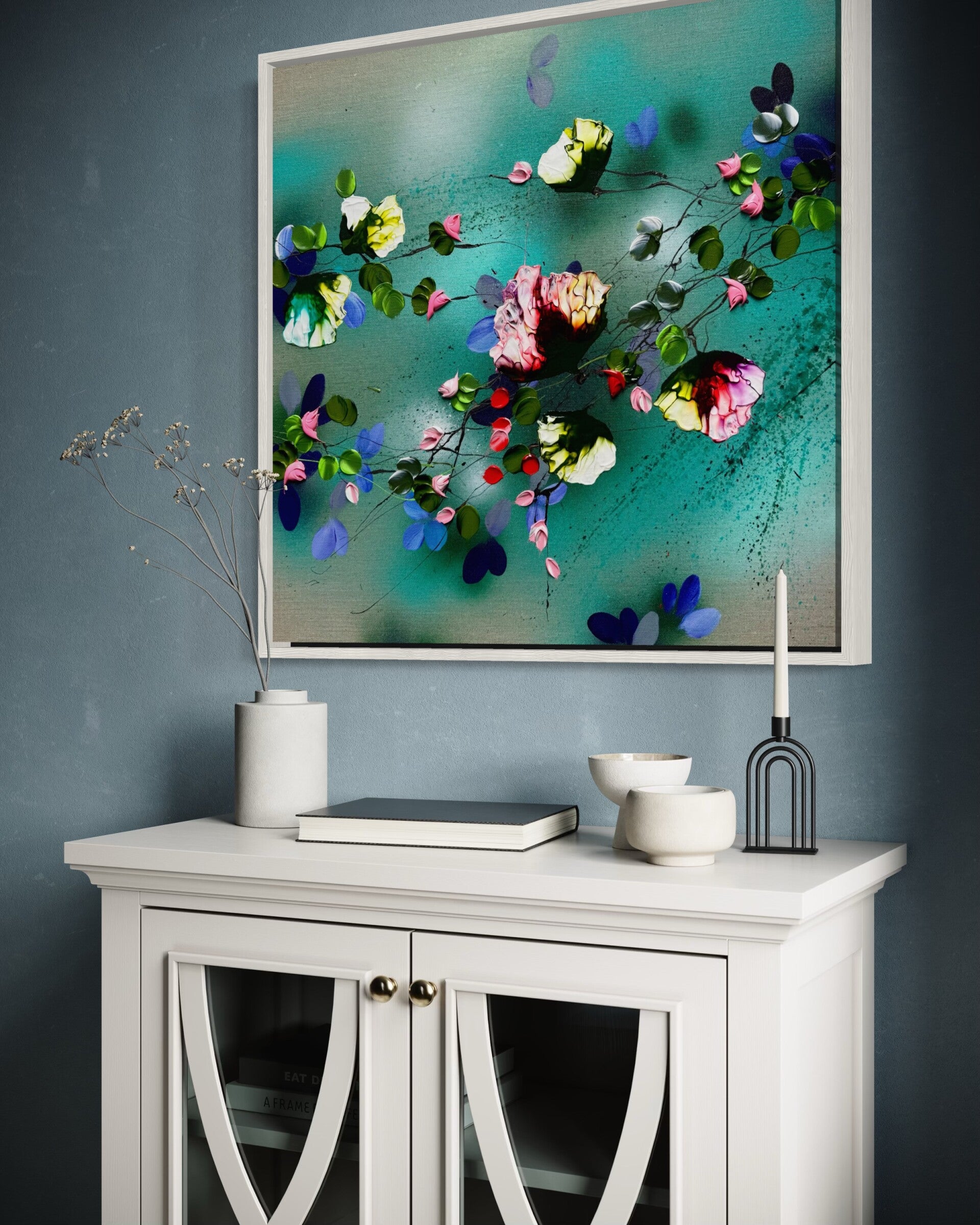
Wabi-Sabi Fragments I - 60 × 60 × 4 cm / 23.6 × 23.6 × 1.6 in
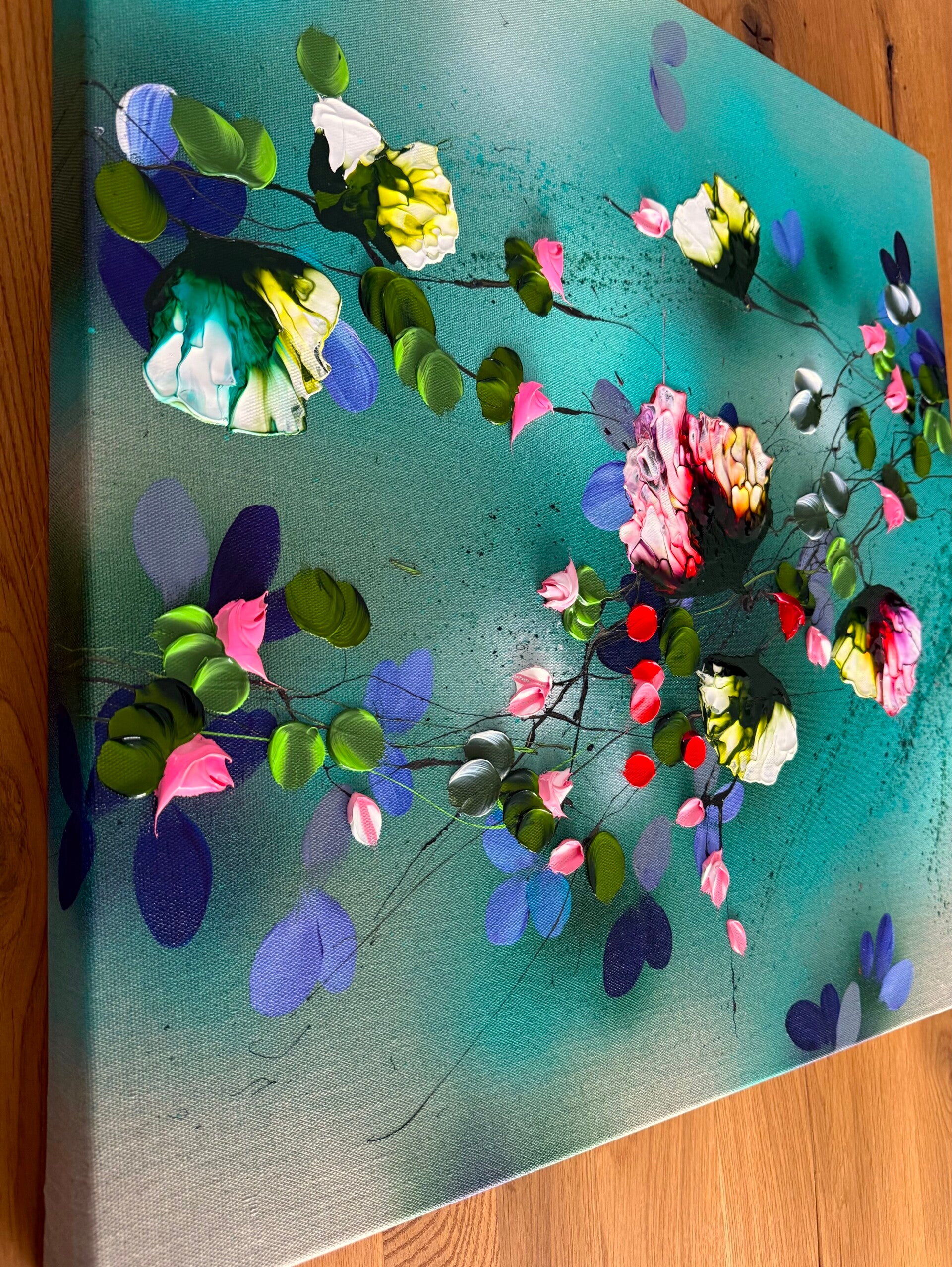
My work lives in the space between control and its absence.
A few years ago I started reading Eckhart Tolle, and that led me to other teachings — Buddhism, Taoism, different threads of Japanese philosophy. What struck me most was how old all of this actually is, and how similar these ideas turn out to be, even when they come from completely different cultures and centuries apart.
One of those ideas is wabi-sabi. In Japanese aesthetics, it means finding beauty in things that are imperfect, incomplete, or irregular — a cracked bowl, an asymmetrical branch, a shape that doesn't quite match. Nothing needs to be fixed or made uniform to be considered whole.
That idea connects directly to something Tolle says often: nothing that happens is actually wrong. Not in the sense that everything is good news, but in the sense that judging things as "wrong" is usually the mind's habit, not reality itself. Things simply are what they are.
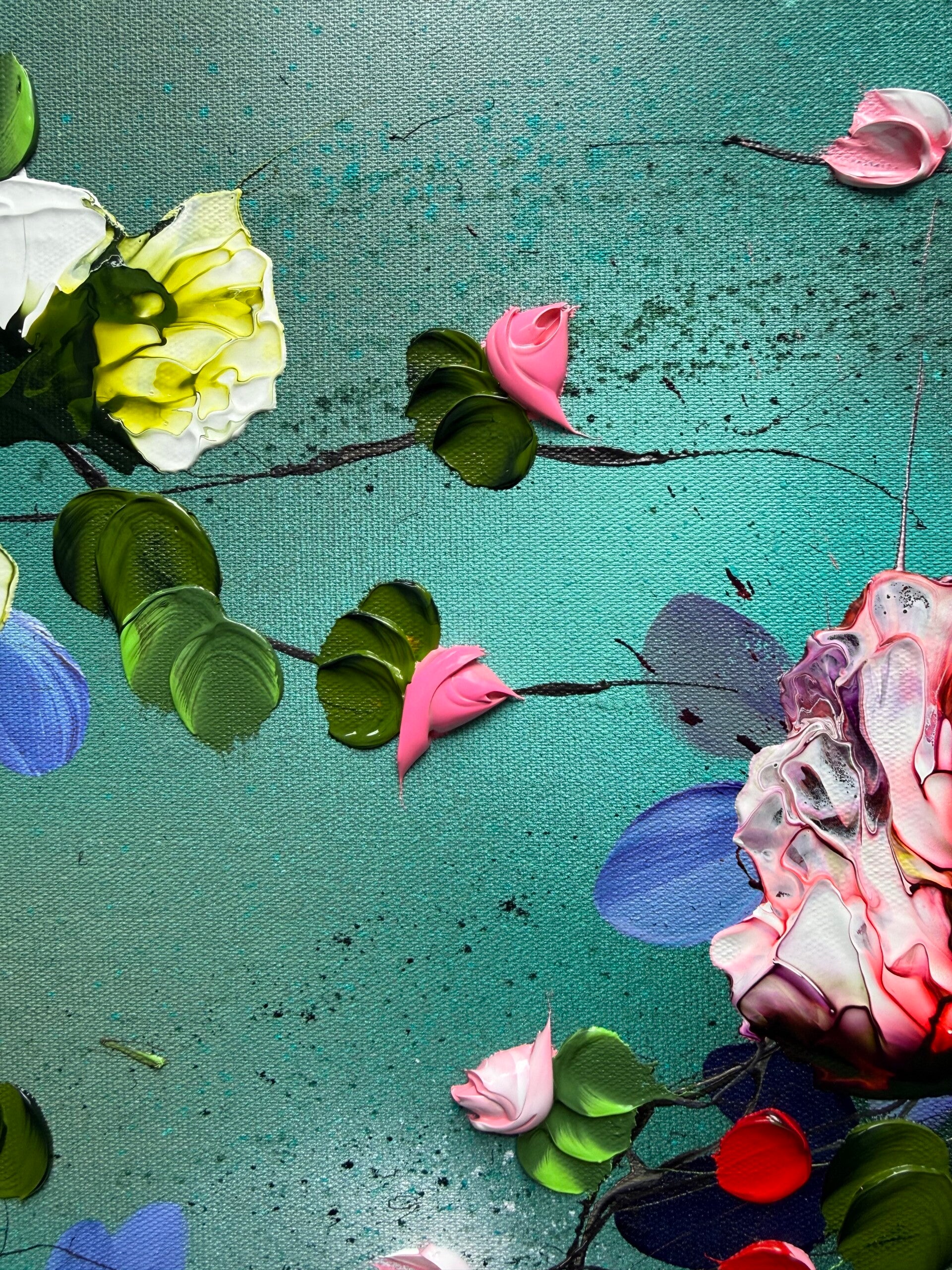
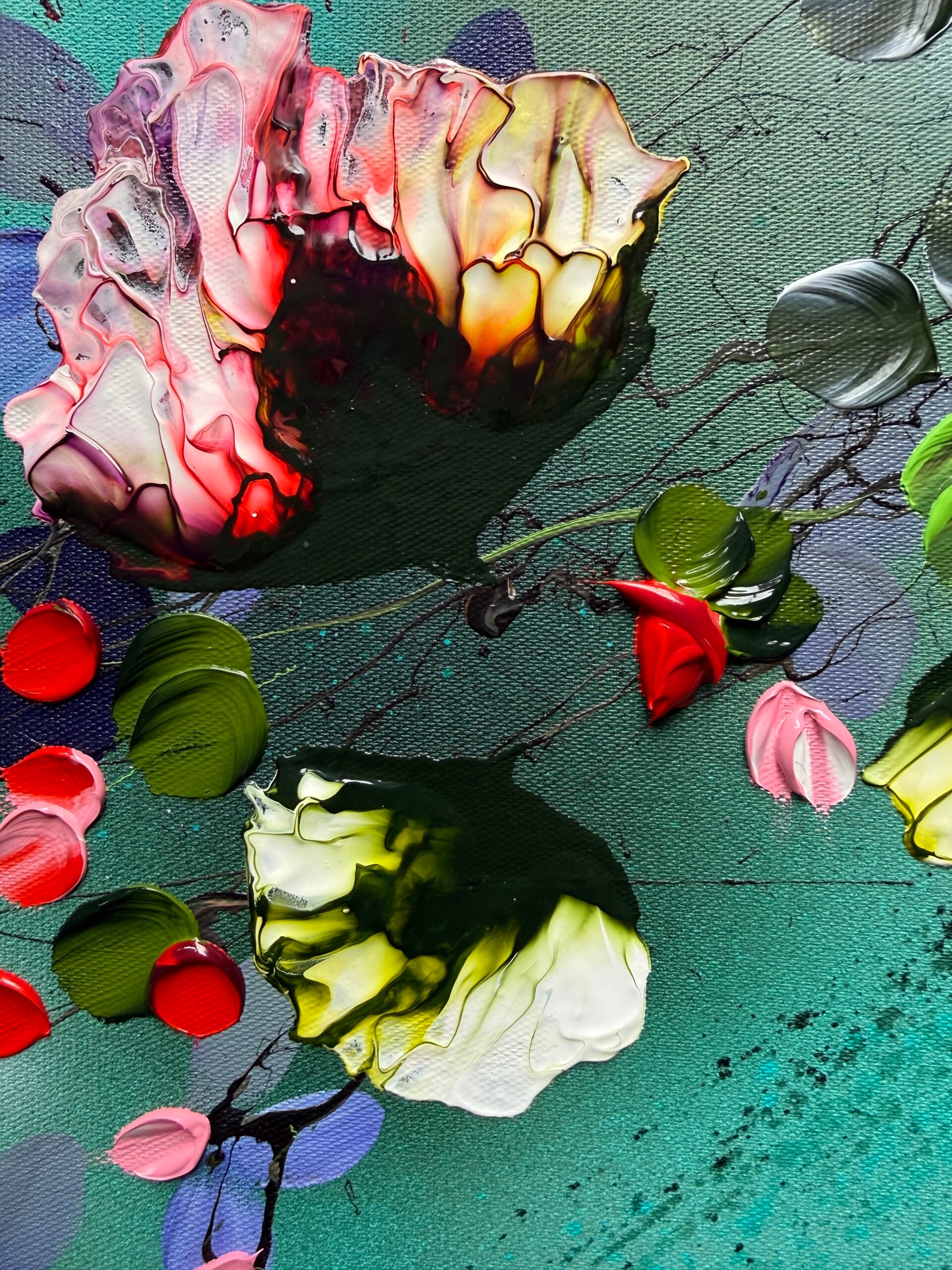
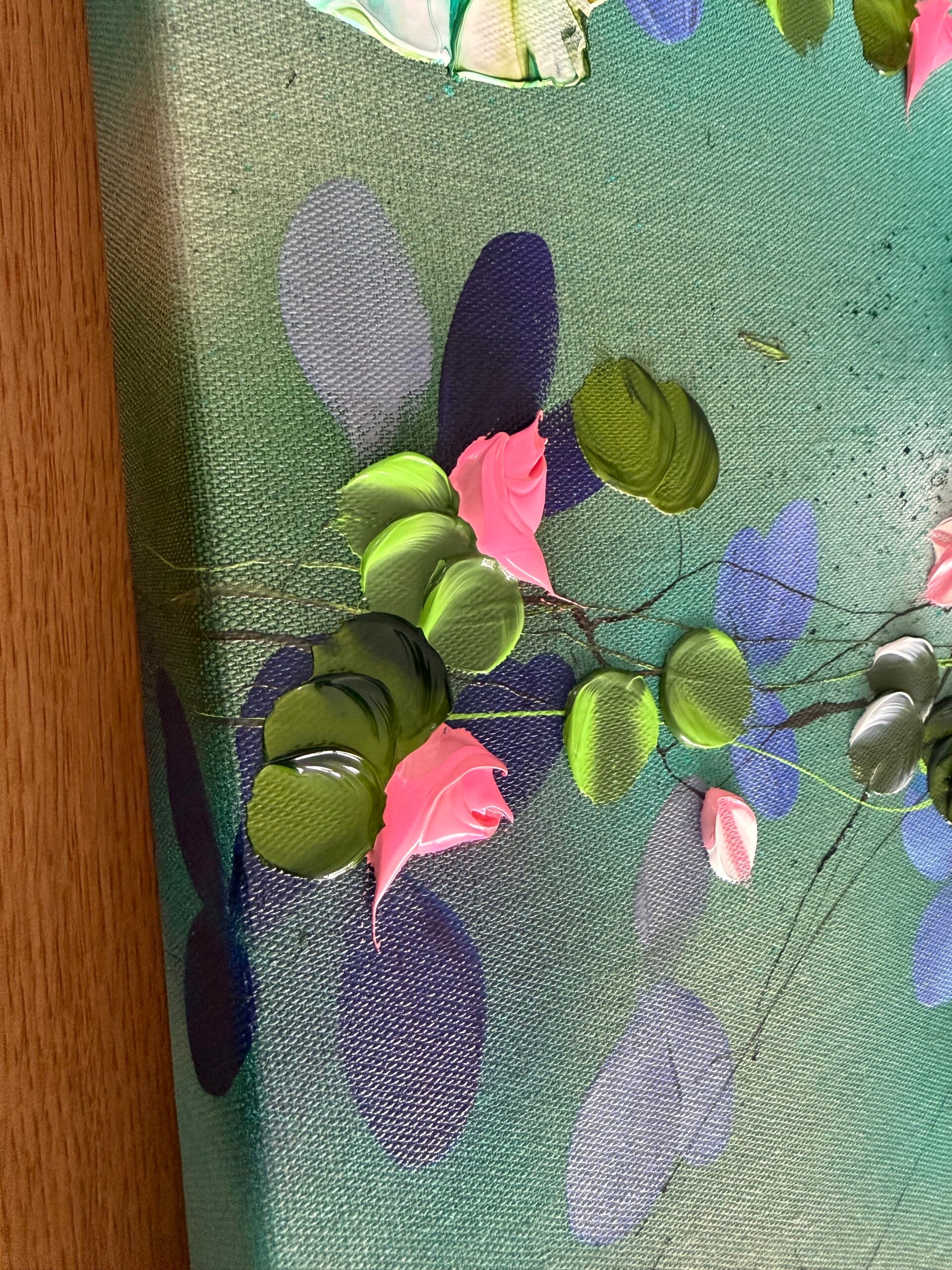
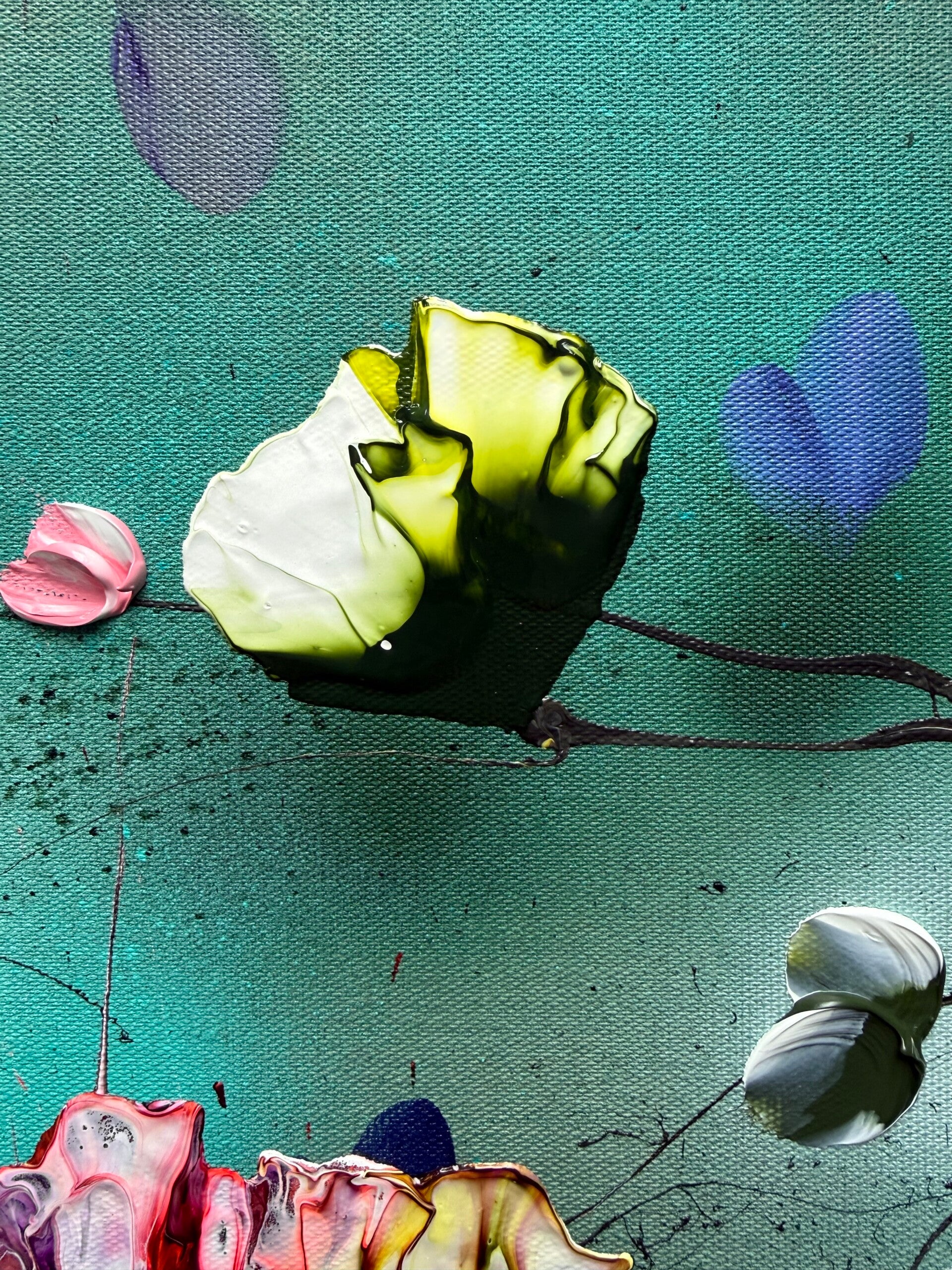
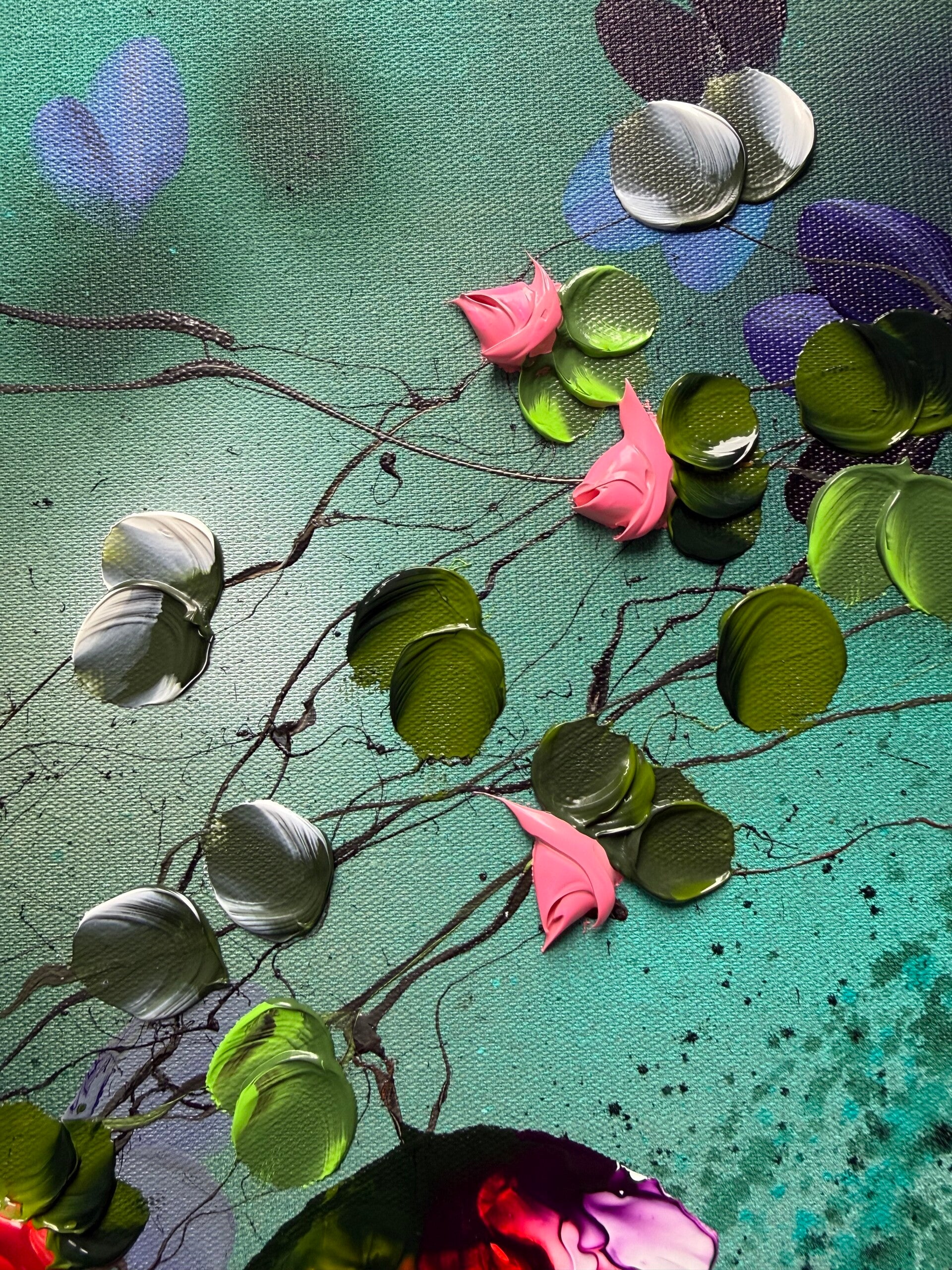
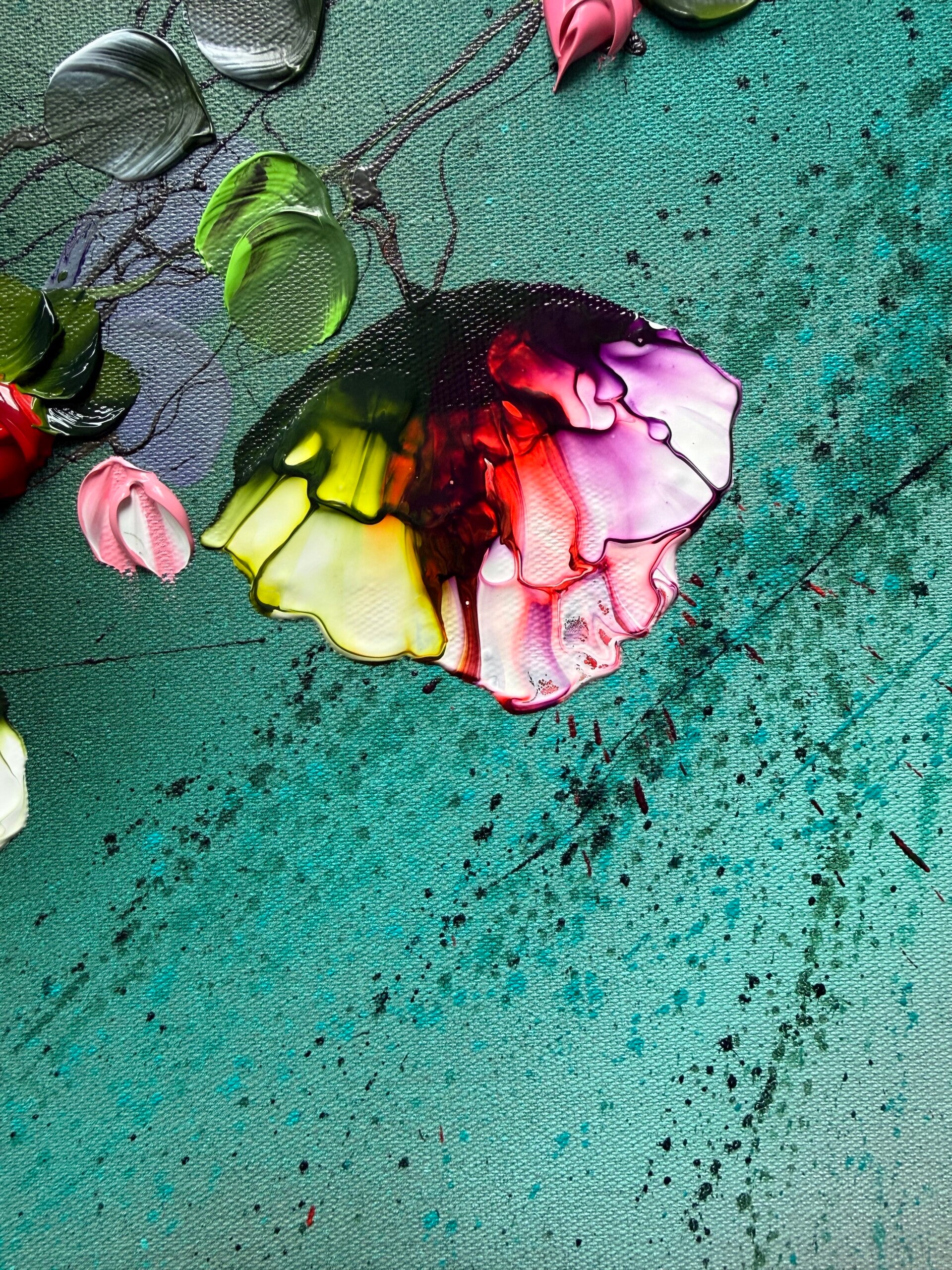
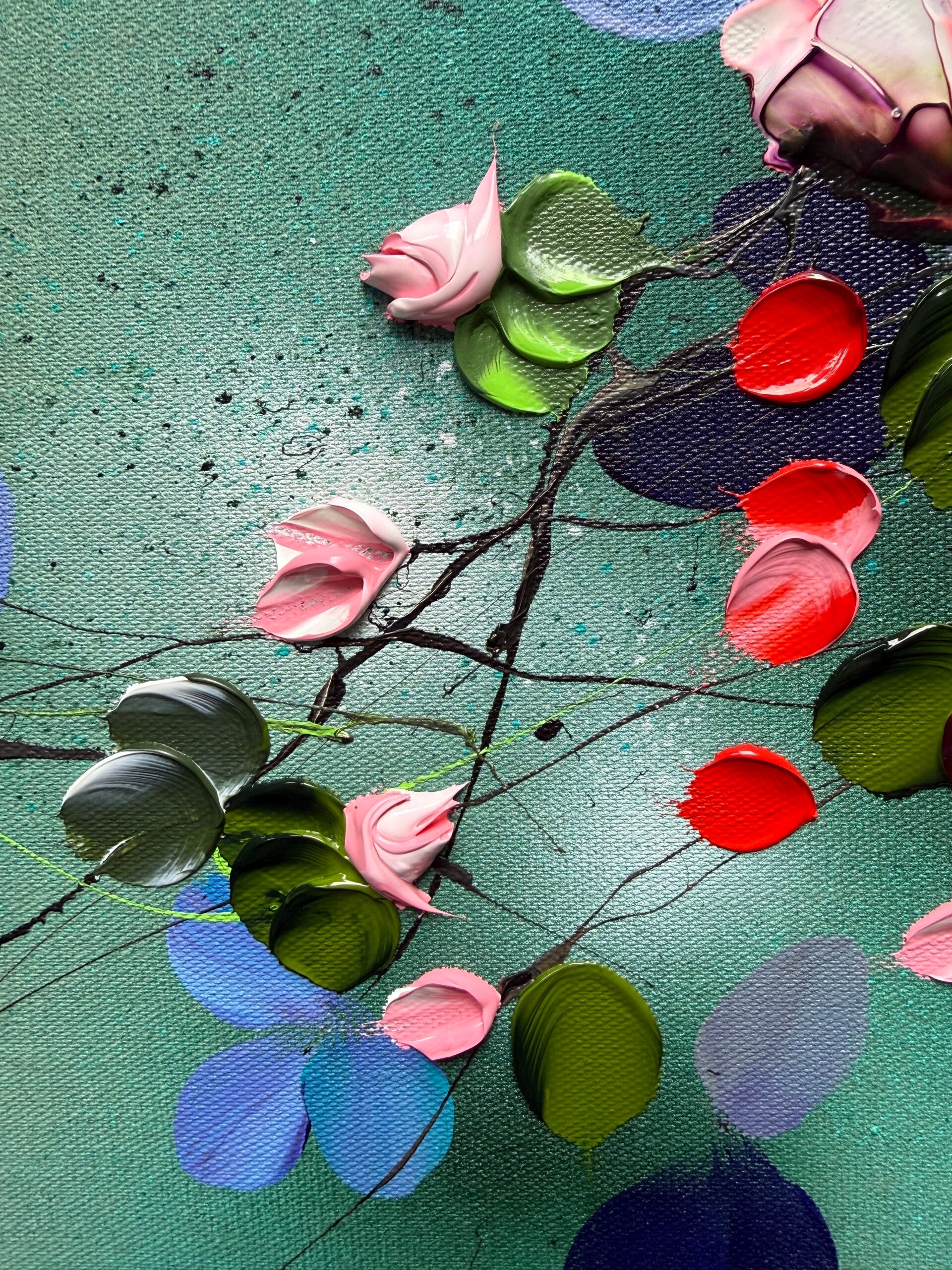
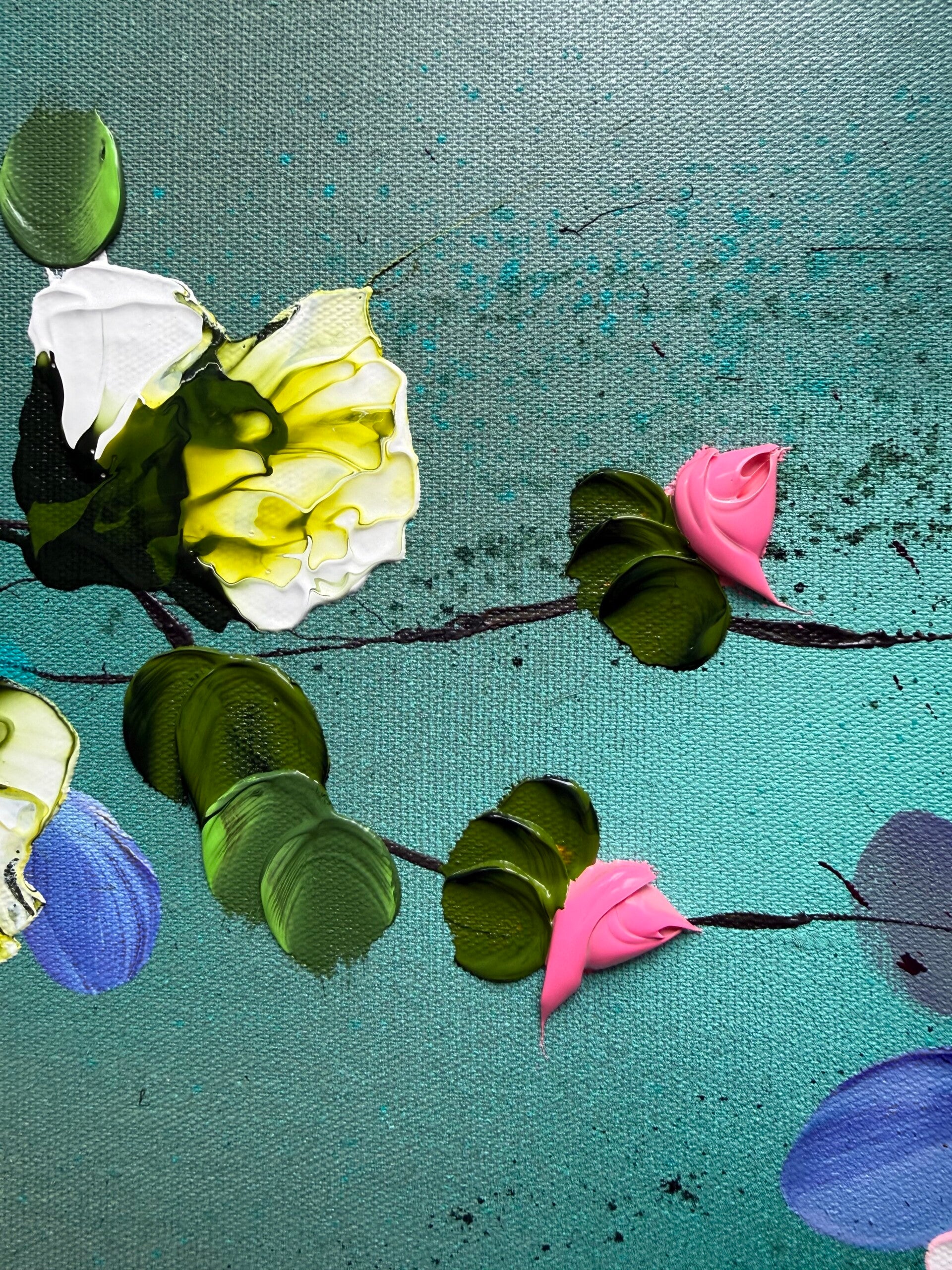
I let the branches land on the canvas however they want, without controlling them. I set the direction — that's the only real power I have over them. Everything else, the branch decides for itself. It's the same with the large roses: I give the paint, but the air decides how it spreads inside the flower. And even when it looks like I'm deciding exactly where each petal or bloom goes, shaped by knife or fruit knife, that isn't quite true either. My mind rests in those moments, and I simply let them land where they want to.
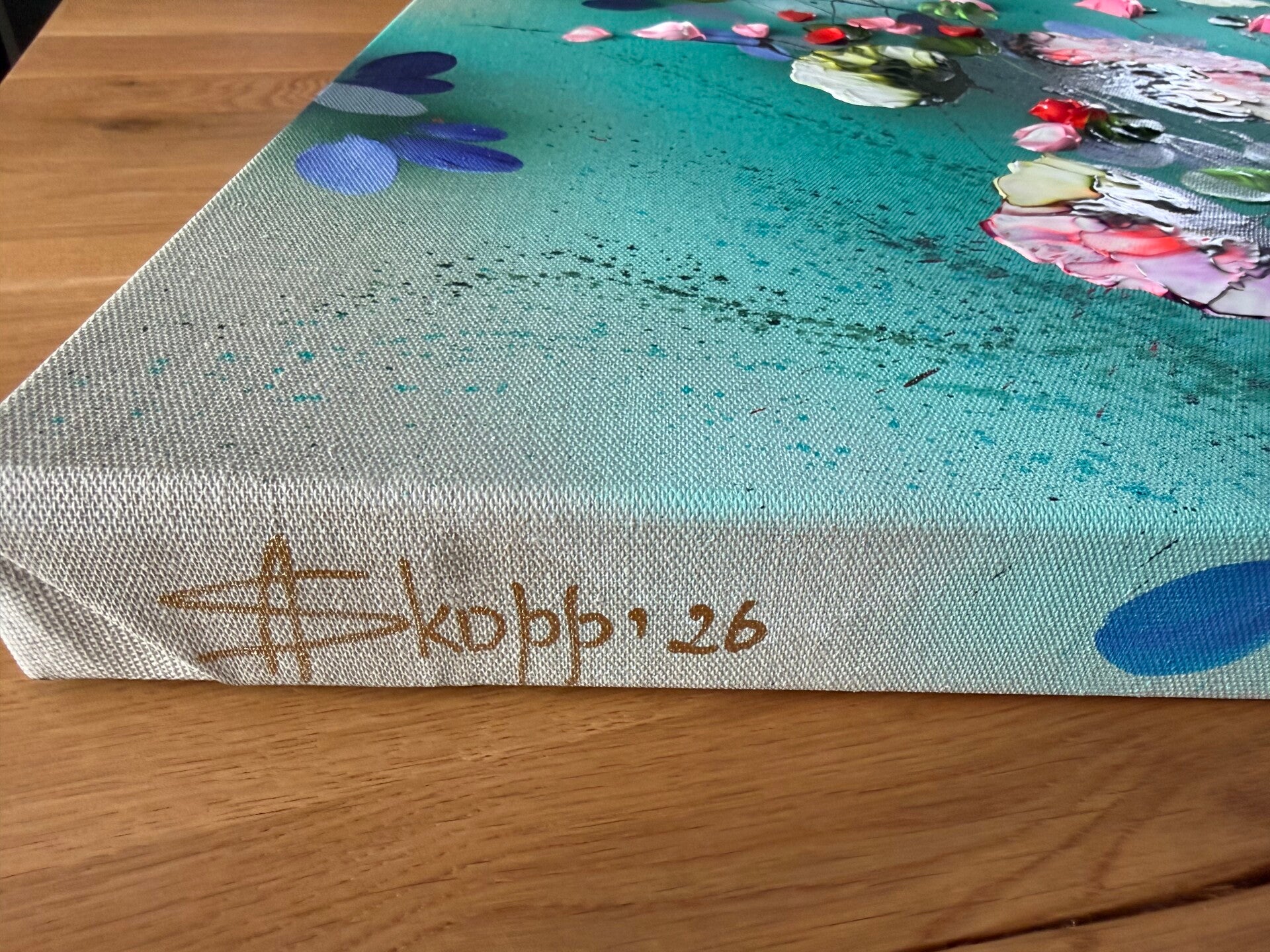
Medium: Acrylic (spray, Heavy Body, Fluid) on 100% linen canvas
Dimensions: 60 × 60 × 4 cm / 23.6 × 23.6 × 1.6 in
Year: 2026
Signed and dated by the artist
Comes with Certificate of Authenticity